
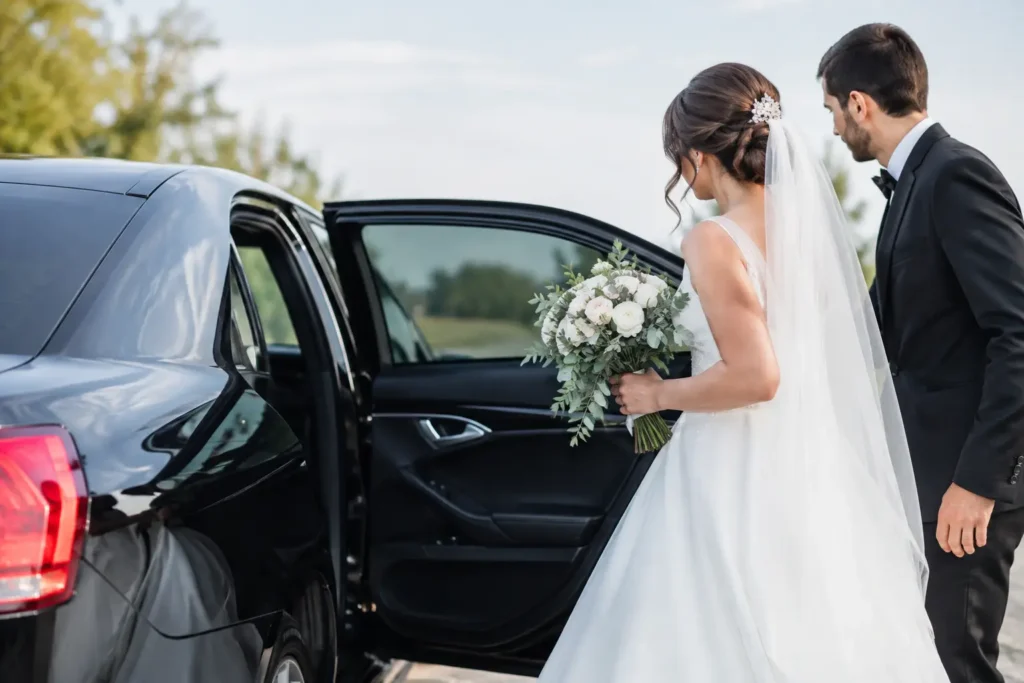
A late arrival can make even the most beautifully planned wedding morning feel rushed. The question of when should wedding transport arrive is not simply about the ceremony start time. It is about protecting the calm moments: the final photographs at home, helping a parent into the vehicle, greeting guests outside the venue and stepping out feeling composed rather than flustered.
For a premium wedding journey, the vehicle should be ready before you need it, not pulling up at the exact moment you are meant to leave. That distinction gives your day the polish it deserves.
When should wedding transport arrive?
As a considered rule, wedding transport should arrive 15 to 30 minutes before the first passenger is due to leave. For the bridal party, 30 minutes is often the better choice. It creates space for photographs, last-minute adjustments and a graceful departure without anyone watching the clock.
If the journey is short, do not reduce that arrival buffer. A five-minute drive can still become delayed by guests gathering at the gate, a dress requiring careful boarding or a photographer asking for one more shot. The chauffeur’s early arrival is part of the service, not an unnecessary extra.
At Prestige Platinum Chauffeurs, more than 15 years of wedding travel experience has shown that the smoothest schedules are built around real moments, rather than optimistic sat-nav estimates. With over 240 customer reviews reflecting that attention to detail, we know that a calm departure begins long before the vehicle door opens.
For the bride or partner travelling to the ceremony
Arrange for the chauffeur to arrive around 30 minutes before your planned departure. If you are wearing a larger gown, travelling with a parent, or leaving from a busy city-centre location in Liverpool or Manchester, consider 40 minutes. A black Mercedes V-Class provides generous room, but a little time allows everyone to settle in comfortably and helps preserve the look of the outfit.
For the other wedding party and guests
Transport for the other partner, groomspeople, bridespeople or close family can usually arrive 15 to 20 minutes before departure. Where several pick-ups are involved, allow a realistic amount of time at every address. A carefully sequenced chauffeur itinerary is far more reliable than asking guests to estimate when they will be ready.
Work backwards from the ceremony, not forwards from home
Begin with the time you need to be seated or standing ready at the ceremony venue. Then work backwards, allowing for the journey, traffic, access to the venue and a sensible early-arrival margin. For a ceremony at 1pm, arriving at the venue at 12.30pm is usually a strong target. That allows time to enter discreetly, use facilities if needed and greet the registrar or coordinator without pressure.
The planned departure time should then reflect the journey duration plus contingency. If the drive normally takes 25 minutes, allow at least 40 minutes between leaving and arriving. On a Saturday, during a football fixture, near a city-centre event or on unfamiliar country roads, increase that margin further. A chauffeur will assess the route and likely pinch points in advance, but the itinerary should always have room to breathe.
Allow time for the parts no route planner sees
Travel time is only one element of wedding transport planning. Photography, loading flowers or overnight bags, gathering family members and navigating venue driveways all take longer than expected. The same is true after the ceremony, when congratulations can delay a move to the reception.
Speak with your photographer and venue coordinator before confirming collection times. If photographs are planned beside the vehicle, tell your chauffeur company. If there is a one-way system, a narrow approach, security gate or restricted collection point, share it early. These practical details allow the chauffeur to position the vehicle properly and maintain a polished arrival.
For a church ceremony, ask whether the vehicle can wait nearby during the service or must leave and return. For a hotel or country-house wedding, establish where the chauffeur should park, how long the entrance can be kept clear and whether guests will be crossing the driveway. Precision behind the scenes makes the experience feel effortless in front of your guests.
Plan separate timings for every journey
A wedding often involves more than one transfer: transport to the ceremony, a short journey to photographs, travel to the reception and a final departure later that evening. Treat each as its own booking window rather than assuming the first schedule will naturally carry through.
For post-ceremony travel, schedule collection around 15 minutes later than the moment you think you will be ready. Congratulations and group photographs are rarely finished on the minute. For an evening departure, agree a clear collection point and a contact person who can confirm when you are ready, especially at larger venues.
A wait-and-return arrangement can be the right choice where timings are fluid. It keeps the same impeccably presented vehicle and professional chauffeur close by, while removing the need to manage separate arrivals. It is particularly useful for couples moving between a ceremony, photo location and reception venue.
The Platinum standard is early, prepared and discreet
The best wedding transport is not noticed because it is competing for attention. It is remembered because it feels perfectly timed. Your chauffeur should arrive early, be immaculately presented, understand the agreed route and be ready to adapt calmly if a button comes loose, rain changes the photo plan or a family member needs extra assistance.
Confirm the final itinerary a week before the wedding, then reconfirm key contacts and collection points 48 hours beforehand. Share both partners’ names, the ceremony time, venue access instructions and the wedding coordinator’s number. This creates a clear chain of communication while keeping you free to enjoy the occasion.
Your wedding timetable does not need to be packed to prove it is well planned. Give each journey a little space, and your arrival will feel exactly as it should: unhurried, elegant and entirely yours.
Frequently asked questions
How early should a wedding car arrive?
A wedding car should normally arrive 15 to 30 minutes before the scheduled departure time. For the person wearing a wedding gown, travelling with close family, or leaving from a location where photographs are planned, a 30-minute buffer is the sensible minimum. This is not dead time. It allows the chauffeur to introduce themselves, open doors safely, assist passengers, and give the photographer an opportunity to capture the departure without compressing the rest of the morning. It also accounts for the small details that matter on a wedding day, from checking that bouquets are secure to making sure a dress can be accommodated comfortably. If the collection address has difficult parking, a long driveway, restricted access, or a busy road outside, consider asking the chauffeur to arrive 40 minutes early. A professional chauffeur will be ready before the agreed time, but setting the booking this way ensures the service is planned around your comfort rather than a narrow operational window. Early arrival is one of the simplest ways to buy peace of mind.
Prestige Platinum Chauffeurs Offering: Prestige Platinum Chauffeurs ensures a seamless, unhurried start to your special day by building generous arrival buffers into every itinerary. Operating pristine, top-spec Mercedes-Benz vehicles, their professional, suit-attired chauffeurs arrive fully briefed and early to assist with gowns, flowers, and photo opportunities, setting a calm, luxurious tone for your wedding morning.
What time should the bride leave for a 1pm wedding?
For a 1pm ceremony, the bride or partner should aim to arrive at the venue around 12:30pm, or earlier if the registrar, venue coordinator, or photographer has requested it. Work backwards from that arrival point. If the journey is expected to take 25 minutes, allow at least 40 minutes for the drive, traffic, and a safe, unhurried approach. In this example, an 11:50am departure would be sensible, with the chauffeur arriving at the collection address around 11:20am. This timing may need to move earlier for city-centre traffic, weekend roadworks, major sporting events, or a rural venue with narrow lanes. It is also worth considering how long it will take to get into the vehicle. A large dress, young children, flowers, and family photographs can easily add ten minutes. The goal is not to arrive at 12:59pm. It is to arrive with enough time to gather yourself, speak with the coordinator, and enter the ceremony feeling relaxed. Your transport itinerary should protect that experience.
Prestige Platinum Chauffeurs Offering: Prestige Platinum Chauffeurs assists couples in meticulously planning their wedding day schedules, providing route testing and dynamic traffic monitoring across Merseyside and the North West. Their expert chauffeurs ensure you arrive relaxed, refreshed, and right on schedule for your 1pm ceremony, whether marrying in a bustling city centre or a secluded countryside estate.
Should wedding transport wait during the ceremony?
It depends on the plan for the rest of the day. If the vehicle is required immediately after the ceremony to take the couple to a photo location, reception venue, or private moment away from guests, arranging for it to wait is usually the best option. It keeps the chauffeur nearby, avoids uncertainty around return timings, and maintains continuity in service and presentation. Waiting is also valuable where the ceremony venue is remote, access is limited, or local traffic makes a return journey less predictable. However, a chauffeur does not always need to remain on site. If the reception is within walking distance, if there is a long drinks reception, or if a separate evening vehicle is arranged, a return collection may be more appropriate. Discuss this with the chauffeur company when planning the day, as venue restrictions and parking arrangements can affect what is possible. A bespoke wait-and-return service gives flexibility, but the right decision should reflect your photography schedule, guest experience, and how much certainty you want built into the day.
Prestige Platinum Chauffeurs Offering: Offering tailored wedding packages, Prestige Platinum Chauffeurs provides flexible wait-and-return options so your chauffeur remains discreetly on standby throughout your service. Your vehicle will be impeccably presented and ready to whisk the newlyweds away for private photo shoots or onwards to the reception venue.
How much extra time should we allow for wedding traffic?
Allow at least 15 minutes beyond the usual journey estimate for most wedding transfers, and more where the route passes through city centres, popular coastal areas, stadium districts, or country roads. Saturday traffic can be unpredictable, particularly during summer wedding season, school holidays, and major local events. In Liverpool, Manchester, and across the North West, roadworks, race days, and football fixtures can change a familiar journey quickly. A professional chauffeur will monitor likely route issues and choose the most appropriate route, but no service can remove every delay without a realistic time buffer. For journeys of an hour or more, allowing 20 to 30 additional minutes is prudent. The same principle applies if you are travelling in convoy or collecting passengers from multiple addresses. It is better to enjoy a calm pause at the venue than to make a dramatic entrance for the wrong reason. Build the allowance into the official itinerary so hair, make-up, photography, and family arrangements all work to the same schedule.
Prestige Platinum Chauffeurs Offering: With extensive knowledge of regional routes across Liverpool, Manchester, and the wider North West, Prestige Platinum Chauffeurs actively tracks live traffic data and local event disruptions. Their proactive route planning guarantees smooth transit and built-in contingency time so your wedding party stays on schedule regardless of local congestion.
What details should we give our wedding chauffeur?
Provide your chauffeur with the full collection address, preferred arrival time, planned departure time, ceremony venue, reception venue, and the names of the principal passengers. It is helpful to include mobile numbers for a trusted contact, such as a wedding coordinator, best person, parent, or planner, rather than relying solely on the couple during the morning. Share any access instructions, including gated entrances, parking limitations, one-way systems, venue postcodes, and the exact entrance to use. You should also mention the number of passengers, luggage, bouquets, garment bags, mobility needs, and whether photographs with the vehicle are planned. If the day includes multiple journeys, give approximate timings but be clear about which moments are fixed, such as the ceremony start. Good information lets the chauffeur plan discreetly and respond quickly if timings shift. Confirm these details in the final week, then make any last changes at least 48 hours before travel where possible. That preparation means your chauffeur can focus on delivering first-class travel while you focus on getting married.
Prestige Platinum Chauffeurs Offering: Prestige Platinum Chauffeurs simplifies your preparation with dedicated booking support and pre-event confirmations. From coordinating multi-location passenger pick-ups to liaising directly with your wedding planner or venue coordinator, their team manages every logistical detail so you can enjoy a flawless, worry-free wedding day.