
Travelling Between the UK and Europe: Common Check-In and Check-Out Issues (and How to Dodge Them)
Once upon a time, hopping over to Europe from the UK felt about as taxing as catching a train to Manchester. You showed up, waved your passport, and got on with your holiday. Those days are gone. Since Brexit, the rules have shifted under our feet, and plenty of British travellers don’t realise it until they’re standing at a check-in desk being told they can’t board.
This isn’t a doom-and-gloom piece. Travel between the UK and Europe is still very much possible — it just requires a bit more thought than it used to. What follows is a rundown of the problems that catch people out most often, and the small habits that keep your trip from going sideways before it’s even started.
Passport Validity: The Silent Trip-Killer
If there’s one thing that ruins more holidays than any other, it’s the passport. Specifically, the rules around it.
Two requirements catch UK travellers heading into the Schengen Area. Your passport must have been issued less than ten years before the date you arrive, and it must still have at least three months left when you plan to leave the EU country. That second clause sounds simple, but the first one trips people up because of something they may have forgotten: under older UK rules, unused months from an expiring passport were sometimes added to the new one. So a passport with “ten years” printed on it might actually be valid for ten years and a few months. The EU does not care. It goes by the issue date.
The result is travellers turning up at Stansted with what they think is a valid passport, only to be told they cannot fly. Airlines carry the legal liability for letting non-compliant passengers board, so they will refuse you without hesitation.
Check the issue date and expiry the moment you book a trip. If there’s any wobble at all, renew. The fee stings less than rebooking a holiday.
Worth knowing: Ireland sits outside Schengen and runs on the older Common Travel Area rules, so the date requirements work differently there.
Border Queues That Test Your Patience
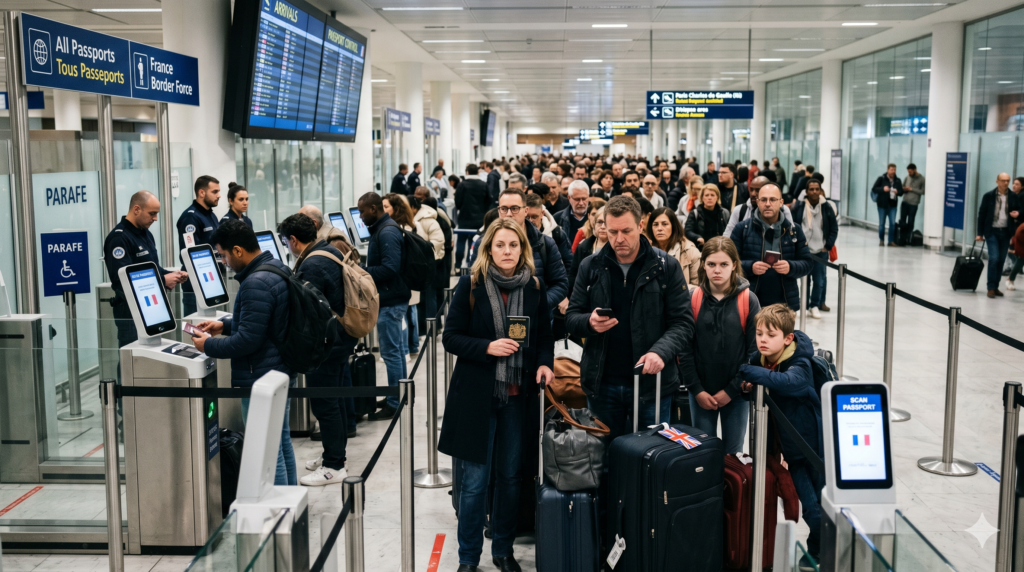
The blue lane is no longer your friend. UK passport holders now use the “all other passports” queue at most EU airports, and at peak times that queue can be brutal.
Málaga, Alicante, Barcelona, Faro, Palma — anywhere with a heavy British contingent during school holidays — can serve up genuinely punishing waits. An hour is normal. Two hours is not unheard of. Families with tired children find this particularly grim.
A few things actually help. Arrive earlier than your gut tells you to, especially for early-morning landings when several flights from Britain often hit immigration at once. If you’re connecting onwards, build in a meaningful buffer rather than the airline’s official minimum. And keep your boarding pass and passport together in an easy-to-grab spot — fumbling through a bag while the queue moves makes a slow process slower for everyone.
Baggage: Where Budget Airlines Make Their Money
Cabin bags have become a financial trap. The major budget carriers — you know the ones — have invested heavily in those metal sizing cages by the gate, and they will charge you for a bag that fits at home but bulges a centimetre too much after you’ve shoved a jumper in at the last minute. Gate fees of £55 or more are routine.
The fixes are unglamorous but effective. Measure your bag at home, including wheels and handles. Weigh it. Check what your fare actually includes — many of the cheapest tickets now come with nothing but a small under-seat bag, and the rules vary between airlines and even between fare classes on the same airline. Don’t assume that what worked on your Ryanair flight last summer applies to your easyJet flight this autumn.
Business travellers, take note: the basic fare on most budget carriers no longer includes overhead cabin baggage as standard.
Online Check-In Quirks
Most airlines now expect you to check in online, and several will charge you if you don’t. Ryanair is the most aggressive about this, but it isn’t alone.
The usual culprits are leaving it too late, entering passport details that don’t quite match the document, or relying on a phone that runs out of battery before you reach the gate. Save your boarding pass as a screenshot or PDF as well as inside the airline app, because apps occasionally refuse to open when you most need them. A printed copy stashed in your bag costs nothing and saves arguments.
The 90/180 Rule and What’s Coming Next
UK citizens can still enter most of the EU without a visa for short stays, but “short” has a specific meaning: ninety days within any rolling 180-day period across the entire Schengen Area. Not ninety days per country. The whole zone counts as one bucket.
This catches out people who treat Europe like an extended weekend habit. Holiday-home owners in France or Spain, retirees who enjoy long winters in Portugal, and digital nomads bouncing between cities can blow through the limit without realising. Overstaying can mean fines, refusal of entry next time, or in serious cases a ban.
The EU’s Entry/Exit System and the ETIAS travel authorisation are due to add another layer of pre-travel admin. Both have had multiple delays, so check the latest official guidance close to your trip rather than trusting whatever you read six months ago.
Healthcare and Travel Insurance
The GHIC card replaced the old EHIC and gives you access to state healthcare in participating countries on similar terms to locals. That’s useful, but it is not a substitute for travel insurance. State systems abroad will still charge for things the NHS provides free, private hospitals aren’t covered at all, and the GHIC won’t get you home if something serious happens.
Proper travel insurance covers the bits that genuinely hurt: emergency repatriation, cancellation, lost luggage, and treatment in private facilities when state ones aren’t available. Declare any pre-existing conditions honestly — insurers love using undeclared conditions as a get-out clause when claims arrive. If you’re skiing, diving, hiring a moped, or doing anything more energetic than sunbathing, check the policy explicitly covers it. Many do not as standard.
Hotels: Tourist Taxes and Other Surprises
European hotels have grown stricter about a few things. Tourist taxes are now standard in Barcelona, Venice, Paris, Amsterdam, Lisbon, and a growing list of other cities — usually a few euros per person per night, payable at check-in or check-out, and often not included in the booking total. They’re rarely expensive, but they irritate when nobody warned you.
Some hotels still want to see the physical card used to make the booking, particularly in France and Italy. If you booked with a virtual card or through a third party, ring ahead. Many hotels will also ask for a passport at check-in, which is normal — they’re recording it for local police registration, a legal requirement in countries like Spain and Italy.
Late arrivals are the other classic friction point. If your flight gets in after 10pm, tell the hotel. Reservations have been cancelled at midnight more than once because the hotel assumed a no-show.
Hire Cars: Photograph Everything
Car hire complaints from UK tourists in Europe are depressingly common, and most come down to the same handful of issues.
You’ll need a credit card, not a debit card, for the security deposit at most major firms. Showing up with only a debit card has stranded plenty of people at airport rental desks. Counter staff will often try to upsell you insurance — sometimes legitimately, sometimes not. Decide what cover you want before you arrive, and be ready to refuse politely.
Then there’s damage. Inspect the car carefully before you drive away, and photograph everything: bumpers, wheel rims, alloys, the roof if you can see it, and the interior. Do the same when you return it, ideally with a member of staff present and signing off the condition. The classic scam is a charge appearing on your card weeks later for damage you never caused.
Fuel policy matters too. “Full to full” is fairest. “Full to empty” — where you pay upfront for a tank and return it empty — almost always works out worse for you.
Coming Home: Customs Caught Up With Us
Since Brexit, you can no longer bring back unlimited shopping from EU countries the way you once could. Personal allowances now apply, and they aren’t generous.
The headline numbers: 200 cigarettes (or equivalent), 18 litres of still wine, four litres of spirits, and £390 worth of other goods. Above those limits, you should declare and pay duty. Meat and dairy products from the EU are also restricted — that ham you picked up in a French market may not legally come home with you.
Border Force does check, particularly at airports with heavy European traffic. Confiscation is the usual outcome for small breaches; financial penalties kick in for anything that looks deliberate. And yes, duty-free purchases at the airport count towards your allowance.
Currency Tricks at Check-Out
Dynamic currency conversion is the polite name for a small con. When you pay in Europe, the card machine or hotel terminal asks whether you’d like to be charged in pounds or in the local currency. Pounds sounds helpful — you know exactly what you’re paying — but the exchange rate baked into that conversion is almost always worse than what your bank would give you.
Always pay in the local currency. Always. The few seconds of mental arithmetic when your statement arrives at home is worth the savings.
A travel-friendly card from one of the digital banks (Monzo, Starling, Revolut, Wise) avoids most foreign-transaction fees and uses the proper Mastercard or Visa exchange rate. Worth setting up before you go if you don’t already have one. And tell your bank you’re travelling — automated fraud systems still occasionally freeze cards used abroad.
When Flights Go Wrong
Delays, cancellations, strikes, the occasional French air-traffic-control walkout — disruption is part of the deal now. The good news is that UK and EU passenger rights rules are reasonably generous, even if airlines aren’t always quick to volunteer them.
If a delay is the airline’s fault and runs over three hours, you may be entitled to compensation on top of a refund or rebooking. If you’re stuck overnight, the airline owes you accommodation and meals. They will rarely tell you this at the desk; you usually have to ask.
Keep every receipt. Photograph departure boards showing the delay. Submit claims through the airline’s official channels first, and if they fob you off, the Civil Aviation Authority takes complaints. Travel insurance typically covers gaps the airline rules don’t.
The Short Version
Most of what’s gone wrong in this article is preventable. A bit of preparation, a few minutes spent with current government guidance, and a healthy scepticism about whatever worked last time will see you through.
Check the passport. Buy the insurance. Pay in the local currency. Photograph the hire car. Keep the receipts.
Europe’s still there, and it’s still good. The paperwork around getting there has just grown up a bit.
We strongly advice that to reduce travel stress and fatigue use our Private Chauffeur Liverpool Airport Transfer Services to any airport in the UK from Liverpool.